In an era of endless streaming subscriptions and rising entertainment costs, the appeal of free television remains incredibly strong. Many households are looking to cut the cord or simply enhance their viewing options without breaking the bank. But when it comes to free TV, you generally have two primary paths: satellite and terrestrial broadcasts. Each offers a unique set of advantages and challenges. Understanding these differences is key to choosing the system that best fits your lifestyle, location, and viewing preferences. This comprehensive guide will walk you through the nuances of satellite and terrestrial free TV, helping you unlock a world of entertainment without a monthly bill.
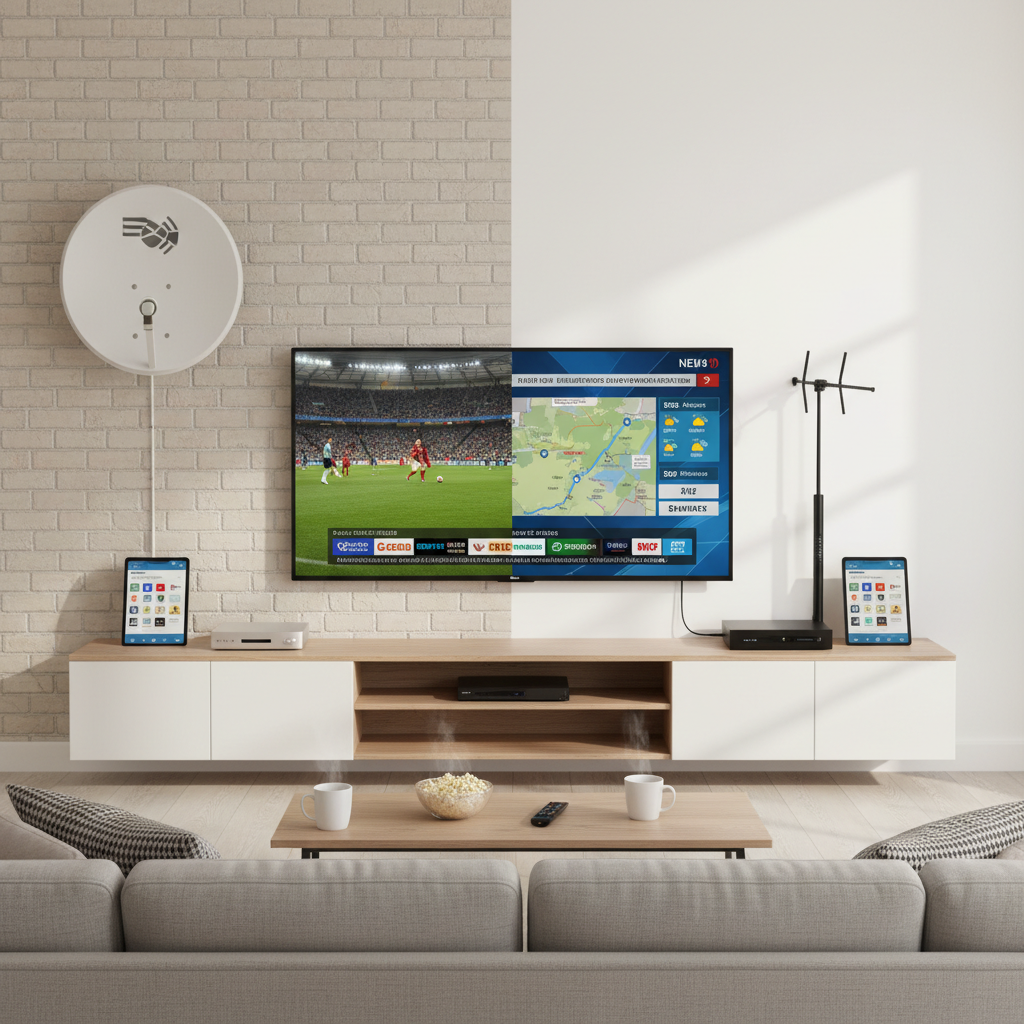
Exploring Free TV: Satellite vs. Terrestrial
Before diving into the specifics, it is important to understand what “free TV” truly means in both contexts. Free-to-Air (FTA) or Over-the-Air (OTA) television refers to unencrypted broadcasts that anyone with the right equipment can receive without a subscription. This stands in contrast to paid services like cable or premium satellite packages. The fundamental difference between satellite and terrestrial television lies in how these signals reach your home.
Terrestrial television relies on ground-based transmission. Signals are broadcast from local TV stations to a network of relay towers, which then transmit them through the air to antennas, commonly known as aerials, at your home. This method has been around for decades, evolving from analog to digital (DVB-T and DVB-T2 standards).
Satellite television, on the other hand, utilizes signals beamed from earth to orbiting satellites, which then re-transmit these signals back down to satellite dishes on the ground. These broadcasts often adhere to DVB-S or DVB-S2 standards. This method typically offers a broader geographic reach and a different selection of channels compared to terrestrial broadcasts.
Terrestrial TV Explained
Terrestrial television, often branded as Freeview in the UK or simply “antenna TV” in other regions, is a bedrock of free entertainment. It delivers a variety of channels directly to your home via local transmission towers.
How Terrestrial TV Works
|
Our Picks for the Best Digital receiver in 2026
As an Amazon Associate I earn from qualifying purchases.
|
||
| Num | Product | Action |
|---|---|---|
| 1 | Denon AVR-S570BT AV Receiver 5.2 Channel 8K Ultra HD Audio & Video, Stereo Receivers, Denon AVR Wireless Streaming Bluetooth, (4) 8K HDMI Inputs, eARC, HD Setup Assistant |

|
| 2 | Sony STRDH190 2-ch Home Stereo Receiver with Phono Inputs & Bluetooth Black |
|
| 3 | Pyle Home Stereo Receiver with Bluetooth - 4 Channel Amplifier, 800 Watt Max, USB-A Input w MP3 Player, Easy Karaoke Setup with Mic Vol, Reverb and Delay, RCA in/Out, SD Card, FM Radio - PDA77BU |
|
| 4 | Daakro AK45 Stereo Audio Amplifier,300W Home 2 Channel Wireless Bluetooth 5.0 Power Amplifier System, Home Amplifiers FM Radio, USB, SD Card, with Remote Control Home Theater Audio Stereo System |
|
| 5 | Donner Stereo Audio Amplifier, 600W Peak 2 Channel Receiver with Bluetooth 5.3, Phono, Optical, Coaxial, USB, FM, 2 Mic-in, Aux, RCA Input for Home, Karaoke, Theater Speakers, MAMP2 |
|
| 6 | Pyle 4-Channel Audio Amplifier with Bluetooth - Home Stereo Receiver w/ 500W Max Power - Commercial or Karaoke - Dual Mic Input with Echo, Vol, Talk-Over - AUX In - Sub Out - USB-A MP3 Player, AM/FM |
|
| 7 | Digital TV Converter Box, ATSC Tv Tuner - ZJBOX for Analog HDTV Live 1080P with Recording&Playback,HDMI Output, Timer Setting Tuner Function Digital Channel Free |
|
| 8 | Pyle 200W Stereo Power Amplifier with Bluetooth - Dual Channel Audio Receiver - LED Display - RCA - USB - SD - MIC IN - FM Radio - AUX Input - Perfect for Home & Computer Audio - PDA29BU.5 |
|
| 9 | Denon AVR-X1700H 7.2 Channel AV Receiver - 80W/Channel, Advanced 8K HDMI Video w/eARC, Dolby Atmos, DTS:X, Built-in HEOS, Amazon Alexa Voice Control |
|
| 10 | YAMAHA R-S202BL Stereo Receiver |
|
Digital terrestrial television (DTT) transmits signals as electromagnetic waves from broadcasting stations to regional relay towers. These towers then distribute the signals through the air, where they are picked up by a compatible antenna. Your television’s built-in tuner or a separate set-top box decodes these signals, converting them into the picture and sound you see on screen. Major national and local networks are typically available through this method.
Equipment You’ll Need
To enjoy terrestrial free TV, you will primarily need:
- A Digital Antenna (Aerial): This can be an indoor antenna for strong signal areas or a more powerful outdoor directional antenna for weaker signal locations.
- A DVB-T/DVB-T2 Compatible TV Tuner: Most modern televisions have this built-in. If you have an older TV, you might need a separate Freeview or DTT set-top box.
- Coaxial Cable: To connect your antenna to your TV or set-top box.
Advantages of Terrestrial TV
Terrestrial TV offers several compelling benefits:
- Cost-Effective: Once you have the equipment, there are no ongoing monthly subscription fees. This makes it an incredibly budget-friendly option.
- Local Content: You gain access to essential local news, weather, and major network programming, which can be crucial for staying informed about your community.
- Reliability: Terrestrial broadcasts are generally less susceptible to severe weather interference compared to satellite signals. In emergency situations or power outages, portable battery-powered TVs with antennas can still receive critical information.
- Simplicity: For many, setting up an indoor antenna and scanning for channels is a straightforward process.
Disadvantages of Terrestrial TV
However, terrestrial TV also comes with its limitations:
- Reception Dependence: Signal strength and channel availability are highly dependent on your geographic location, proximity to broadcast towers, and surrounding terrain (hills, tall buildings). Obstructions can lead to poor reception or missing channels.
- Limited Channel Count: While it offers core channels, the overall number of channels available on terrestrial TV is typically fewer than what satellite free-to-air provides.
- Channel Scanning: You may need to rescan for channels if you move your antenna, if new channels are added, or if broadcast frequencies change.
Setting Up Your Terrestrial TV System
Setting up terrestrial TV is usually a simple process:
- Connect Your Antenna: Plug the coaxial cable from your antenna into the “ANT IN” or “RF IN” port on the back of your TV or set-top box.
- Select Input: Change your TV’s input source to “TV” or “Antenna.”
- Perform Channel Scan: Navigate to your TV’s settings menu (often labeled “Broadcasting,” “Channel Setup,” or “Auto Program”). Select “Start” or “Scan” to begin searching for available channels. Choose “Air” or “Antenna” as the signal type.
- Optimize Antenna Position: If reception is poor, try repositioning your antenna and rescanning until you achieve the best signal strength.
Satellite TV Explained
For those seeking a wider array of channels, especially in rural areas or with an interest in international content, free satellite TV offers a compelling alternative.
How Satellite TV Works
Free-to-Air (FTA) satellite TV operates by receiving unencrypted signals from geostationary satellites orbiting thousands of miles above Earth. An uplink dish on the ground transmits programming to these satellites, which then broadcast the signals over a vast footprint. Your satellite dish captures these signals, focusing them onto a Low-Noise Block downconverter (LNB). The LNB converts the high-frequency satellite signals into lower frequencies, which are then sent via coaxial cable to an FTA satellite receiver. This receiver decodes the signals, allowing you to watch the channels.
Equipment You’ll Need
To set up free satellite TV, you will generally require:
- A Satellite Dish: The size depends on your location and the specific satellites you wish to receive.
- An LNB (Low-Noise Block Downconverter): Mounted on the dish, it amplifies and converts the signals.
- An FTA Satellite Receiver: This can be a standalone set-top box or a TV with an integrated DVB-S2 tuner.
- Coaxial Cable: To connect the LNB to the receiver.
- A Satellite Finder (Optional but Recommended): A tool to assist in precise dish alignment.
Advantages of Satellite TV
Satellite free TV comes with a distinct set of benefits:
- Extensive Channel Selection: FTA satellite often provides access to a much larger number of channels compared to terrestrial TV, including many international, religious, news, and educational broadcasts.
- Wider Coverage: Satellite signals are less restricted by local topography, making them an excellent option for viewers in remote or rural areas where terrestrial signals are weak or non-existent.
- High Quality: Many FTA satellite channels broadcast in high-definition (HD), offering crisp picture and sound quality.
- Portability: With suitable equipment, satellite TV can be used in mobile settings like RVs and caravans, allowing you to take your free TV with you.
- International Content: Dedicated FTA receivers can often be adjusted to receive signals from multiple satellites, opening up a world of foreign language programming.
Disadvantages of Satellite TV
Despite its advantages, free satellite TV also has some drawbacks:
- Complex Installation: Installing a satellite dish often requires precise alignment and a clear line of sight to the satellite, which can be more challenging than setting up a terrestrial antenna. Professional installation might be necessary.
- Equipment Cost: The initial investment in a dish, LNB, and receiver can be higher than for a basic terrestrial antenna setup.
- Weather Interference: Heavy rain, snow, or severe storms can cause signal degradation, known as “rain fade,” leading to temporary loss of picture or sound.
- Line of Sight: The dish needs an unobstructed view of the satellite. Trees, buildings, or other obstacles can block the signal.
Setting Up Your Satellite TV System
Installing a satellite system requires a bit more precision:
- Choose a Location: Select a sturdy mounting location for your dish with a clear, unobstructed view of the desired satellite(s). Online tools can help you determine the correct azimuth (horizontal) and elevation (vertical) angles for your location.
- Mount the Dish: Securely attach the mounting bracket and then the dish, ensuring it is perfectly vertical.
- Connect LNB and Cables: Attach the LNB to the dish arm. Run a coaxial cable from the LNB to your FTA receiver inside the house.
- Align the Dish: This is the most crucial step. Using a satellite finder or your receiver’s signal strength meter, slowly adjust the dish’s elevation and azimuth until you achieve maximum signal strength. Even minor adjustments can make a big difference.
- Connect Receiver to TV: Plug your FTA receiver into your TV using an HDMI cable.
- Perform Channel Scan: Power on the receiver and TV, select the correct input, and access the receiver’s menu. Look for a “Channel Scan” or “Single Satellite Scan” option. Ensure “FTA Only” is selected if available. The receiver will then search for all unencrypted channels.
Satellite vs. Terrestrial: A Detailed Look
To help you make an informed decision, here’s a side-by-side comparison of key aspects:
| Feature | Terrestrial TV (e.g., Freeview) | Satellite TV (e.g., Freesat, FTA) |
|---|---|---|
| Delivery Method | Ground-based transmitters via aerials | Orbiting satellites via satellite dishes |
| Equipment | Digital antenna (aerial), DVB-T/T2 tuner (often built-in) | Satellite dish, LNB, FTA receiver/DVB-S2 tuner |
| Channel Count | Generally fewer (e.g., 60-70+ in the UK) | Generally more (e.g., 100-180+ in the UK, plus many international FTA) |
| Channel Type | Primarily national and local broadcast networks | Broad mix including national, international, religious, news, niche |
| Coverage | Dependent on proximity to transmission towers; signal can be poor in remote/hilly areas | Excellent coverage in remote areas; requires clear line of sight to satellite |
| Installation | Simpler (indoor or outdoor aerial); often DIY-friendly | More complex (precise dish alignment); often requires professional help |
| Initial Cost | Lower (for basic aerial and built-in tuner) | Potentially higher (for dish, LNB, and receiver) |
| Signal Quality | Can be excellent HD, but susceptible to local obstructions | Generally excellent HD, but susceptible to “rain fade” from severe weather |
| Portability | Limited by local broadcast range | Good for mobile use (RVs, caravans) with appropriate equipment |
| Ongoing Costs | None | None |
Choosing the Right Free TV Option for You
Deciding between free satellite and terrestrial TV boils down to several personal factors:
- Your Location: If you live in an urban or suburban area with good access to terrestrial broadcast towers, an antenna might be all you need for reliable service. If you’re in a rural location with weak terrestrial signals or physical obstructions, satellite TV is often the superior choice for signal quality and channel availability.
- Channel Preferences: Do you primarily want major national networks and local news? Terrestrial TV excels here. Are you looking for a vast selection of international programming, niche channels, or more obscure content? FTA satellite will likely offer more options.
- Budget and Technical Comfort: Terrestrial setups can be very inexpensive and easy to install. Satellite systems, while free to watch, involve a higher initial equipment cost and a more involved installation process that might require a professional.
- Reliability Needs: Both systems are generally reliable. However, terrestrial is less affected by severe weather, while satellite offers consistent coverage regardless of ground topography.
“The choice between free satellite and terrestrial television ultimately hinges on individual needs. Assess your local signal environment, prioritize the types of content you seek, and consider your comfort with the installation process to make the best decision for your home entertainment.” – Sarah Chen, Digital Media Analyst
Maximizing Your Free TV Experience
Regardless of whether you choose satellite or terrestrial, here are some tips to get the most out of your free TV setup:
- Check Signal Availability: For terrestrial, use online tools (like the FCC’s DTV Reception Maps in the US) to see which channels are available in your area and the recommended antenna type. For satellite, use sites like DishPointer.com to identify available satellites and required dish angles.
- Invest in Quality Equipment: A good quality antenna or satellite dish and receiver can significantly improve reception and overall viewing experience.
- Proper Installation: Ensure your antenna or dish is installed correctly and has a clear line of sight to its signal source. Even small misalignments can lead to signal loss.
- Regular Channel Scans: For terrestrial TV, periodically run a channel scan to pick up new channels or signal changes. For satellite, ensure your receiver has the latest firmware for optimal performance.
- Utilize EPG (Electronic Program Guide): Both terrestrial and satellite receivers typically offer an EPG, allowing you to browse schedules and plan your viewing.
- Consider DVR: Many free TV receivers or smart TVs can be paired with a digital video recorder (DVR) to record live shows, pause, and rewind, adding convenience to your viewing.
The Future of Free TV
While traditional terrestrial and satellite free TV remain vital, especially for those prioritizing no ongoing costs, the landscape is evolving. New IP-based free TV services, like Freely in the UK, are emerging, delivering live and on-demand content over broadband internet. These services blend traditional linear TV with streaming, offering a unified electronic program guide without needing an aerial or dish. While this signals a shift, the foundational broadcast methods of satellite and terrestrial will likely continue to serve as crucial lifelines for universal access to information and entertainment for years to come.
Conclusion
The world of free television offers fantastic value, providing a diverse range of channels without the burden of monthly subscriptions. Whether you opt for the localized simplicity of terrestrial TV or the expansive reach of satellite, understanding the core differences is paramount. Terrestrial TV provides reliable local access with straightforward setup, ideal for urban dwellers with good signal. Satellite TV opens up a broader universe of channels and superior coverage in remote areas, though it requires a more involved installation.
By carefully considering your unique circumstances and preferences, you can make an informed decision and confidently set up a free TV system that delivers endless hours of entertainment. Why pay for channels when a wealth of content is waiting for you to simply tune in?