Few things are as frustrating as settling in to watch your favorite show, only to be met with a screen full of scrambled pixels and garbled audio. The dreaded “scrambled channel” error is a common headache for digital receiver users, turning your anticipated viewing experience into a perplexing technical challenge. But don’t worry, you’re not alone, and more importantly, this issue is often fixable with a few straightforward troubleshooting steps. This comprehensive guide will equip you with the knowledge to diagnose and resolve scrambled channel errors, getting you back to crystal-clear entertainment on your digital receiver.
What is a “Scrambled Channel” Error?
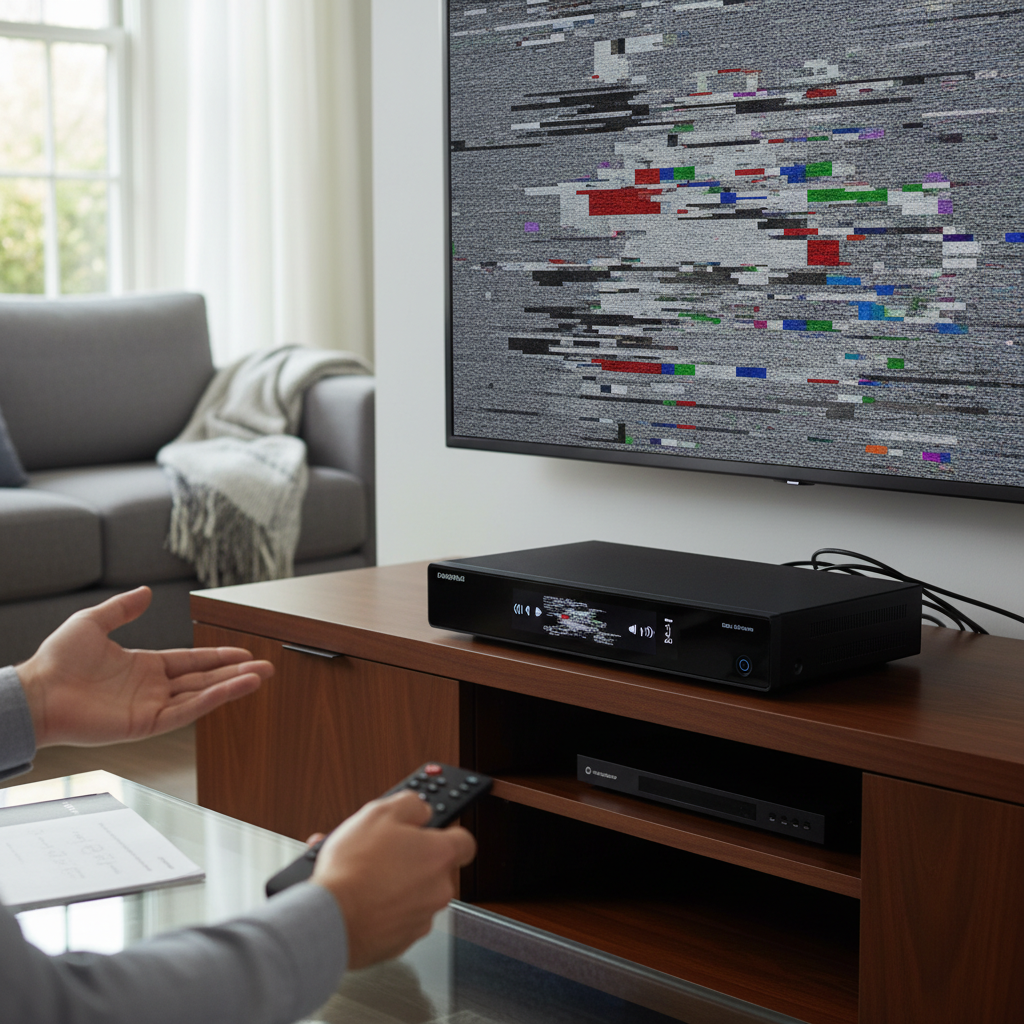
At its core, a “scrambled channel” error means your digital receiver isn’t properly decrypting the television signal it’s receiving. TV channels, especially premium or subscription-based ones, transmit their content in an encrypted or “scrambled” format to prevent unauthorized viewing. Your digital receiver, whether it’s a cable box, satellite receiver, or a DVB-T2/S2/C set-top box, contains a decoding mechanism (often involving a smart card or integrated software) that unlocks this encrypted signal. When you see a scrambled channel, it indicates a breakdown in this decoding process. This could manifest as distorted pictures, pixelation, a “scrambled,” “encrypted,” or “unauthorized” message on your screen, or even a complete black screen with only audio static. Understanding why your receiver can’t decode the signal is the first step toward finding a solution.
Common Causes Behind the “Scrambled Channel” Error
Identifying the root cause of a scrambled channel is crucial for effective troubleshooting. The error can stem from various sources, ranging from simple oversight to more complex technical issues.
Subscription and Authorization Issues
|
Our Picks for the Best Digital receiver in 2026
As an Amazon Associate I earn from qualifying purchases.
|
||
| Num | Product | Action |
|---|---|---|
| 1 | Pyle 200W Stereo Power Amplifier with Bluetooth - Dual Channel Audio Receiver - LED Display - RCA - USB - SD - MIC IN - FM Radio - AUX Input - Perfect for Home & Computer Audio - PDA29BU.5 |

|
| 2 | Daakro AK45 Stereo Audio Amplifier,300W Home 2 Channel Wireless Bluetooth 5.0 Power Amplifier System, Home Amplifiers FM Radio, USB, SD Card, with Remote Control Home Theater Audio Stereo System |
|
| 3 | Donner Stereo Audio Amplifier, 600W Peak 2 Channel Receiver with Bluetooth 5.3, Phono, Optical, Coaxial, USB, FM, 2 Mic-in, Aux, RCA Input for Home, Karaoke, Theater Speakers, MAMP2 |
|
| 4 | Digital TV Converter Box, ATSC Tv Tuner - ZJBOX for Analog HDTV Live 1080P with Recording&Playback,HDMI Output, Timer Setting Tuner Function Digital Channel Free |
|
| 5 | Sony STRDH190 2-ch Home Stereo Receiver with Phono Inputs & Bluetooth Black |
|
| 6 | Pyle 4-Channel Audio Amplifier with Bluetooth - Home Stereo Receiver w/ 500W Max Power - Commercial or Karaoke - Dual Mic Input with Echo, Vol, Talk-Over - AUX In - Sub Out - USB-A MP3 Player, AM/FM |
|
| 7 | Denon AVR-S570BT AV Receiver 5.2 Channel 8K Ultra HD Audio & Video, Stereo Receivers, Denon AVR Wireless Streaming Bluetooth, (4) 8K HDMI Inputs, eARC, HD Setup Assistant |
|
| 8 | Pyle Home Stereo Receiver with Bluetooth - 4 Channel Amplifier, 800 Watt Max, USB-A Input w MP3 Player, Easy Karaoke Setup with Mic Vol, Reverb and Delay, RCA in/Out, SD Card, FM Radio - PDA77BU |
|
| 9 | Denon AVR-X1700H 7.2 Channel AV Receiver - 80W/Channel, Advanced 8K HDMI Video w/eARC, Dolby Atmos, DTS:X, Built-in HEOS, Amazon Alexa Voice Control |
|
| 10 | YAMAHA R-S202BL Stereo Receiver |
|
The most frequent reason for a scrambled channel is often related to your subscription status. If you’re attempting to view a channel that isn’t included in your current package, or if your subscription has recently expired, renewed, or experienced a billing issue, your provider will encrypt the signal, making it unviewable. Similarly, parental control settings on your digital receiver can lock or scramble specific channels, preventing access without a PIN.
Weak or Interrupted Signal
A poor or intermittent signal is another primary culprit. Digital signals require a certain strength and quality to be decoded correctly. Factors like a poorly positioned antenna (for terrestrial broadcasts), obstructions, inclement weather, loose coaxial cables, damaged wiring, or excessive signal splitting within your home can degrade the signal. For satellite receivers, dish misalignment can lead to significant signal loss and scrambled channels.
Outdated Firmware or Software
Just like any electronic device, your digital receiver relies on its internal software, or firmware, to function correctly. Outdated firmware can lead to compatibility issues with broadcast changes, security updates, or even internal glitches that prevent proper channel decoding. Regular updates are essential for optimal performance and to avoid the “scrambled channel” message.
Loose or Damaged Connections
It sounds simple, but often the most overlooked issue is a physical connection problem. A loose coaxial cable connecting your antenna or wall outlet to your receiver, or a loose HDMI cable connecting your receiver to your TV, can disrupt the signal flow. Damaged cables, either internal or external, can also lead to signal degradation and scrambling.
Digital Receiver Malfunction
Sometimes, the issue lies within the receiver itself. Temporary software glitches, memory buildup, or even minor hardware faults can cause the decoding process to fail. These problems often manifest as intermittent scrambling or affect multiple channels simultaneously.
Resolution Mismatch
For some advanced setups, particularly with cable boxes that offer “native resolution” output, switching between channels broadcast at different resolutions can cause a momentary scrambled appearance or delay as your TV adjusts. While often brief, persistent issues can indicate a problem with the setting or the box itself.
Essential Troubleshooting Steps for Your Digital Receiver
When faced with a scrambled channel, start with these fundamental troubleshooting steps. They are often the quickest and most effective solutions.
Step 1: Verify Your Subscription and Billing
Before delving into technical fixes, always confirm your subscription status. Log into your service provider’s online portal or call their customer support. Ensure the channel you’re trying to watch is part of your current package and that your account is in good standing. If your subscription recently renewed, sometimes a signal refresh from the provider is needed. Also, check your receiver’s parental control settings to ensure the channel hasn’t been accidentally blocked.
Step 2: Power Cycle Your Equipment
This classic IT solution works wonders for digital receivers. A power cycle can clear temporary glitches, refresh the receiver’s memory, and re-establish communication with your service provider.
- Turn off your TV and digital receiver.
- Unplug the power cords from both the TV and the receiver (and any connected cable modems or routers, if applicable).
- Wait for at least 60 seconds. This allows residual power to drain completely.
- Plug all devices back into their power outlets.
- Turn on your TV, then your digital receiver, and allow them to fully boot up.
- Check the scrambled channel again.
Step 3: Inspect All Cable Connections
Loose or damaged cables are a common cause of signal problems.
- Turn off your digital receiver and TV.
- Carefully check all cables connected to your receiver:
- Coaxial cable: Ensure it’s securely screwed into the “RF In” or “Antenna In” port on your receiver and the wall outlet or antenna. Check for any kinks, cuts, or fraying.
- HDMI/AV cables: Make sure they are firmly plugged into both your receiver and your TV. Try unplugging and re-plugging them.
- Power cable: Confirm it’s snugly connected to the receiver and the power outlet.
- If you find any damaged cables, consider replacing them.
Step 4: Perform a Channel Scan (Auto-Tune)
Broadcast standards and channel frequencies can change, especially for over-the-air (DVB-T2) and sometimes cable (DVB-C) users. Your receiver might be trying to tune to an old frequency.
- Access your digital receiver’s (or TV’s, if it has a built-in tuner) main menu or settings.
- Look for options like “Channel Scan,” “Auto-Tune,” “Program Setup,” or “Installation.”
- Initiate a full scan. This process can take several minutes as the receiver searches for all available channels and updates its lineup.
- Once complete, check if the scrambled channels are now clear.
Step 5: Check Signal Strength
Most digital receivers have a diagnostic menu that displays signal strength and quality.
- Navigate to your receiver’s settings menu.
- Look for “Signal Information,” “Diagnostics,” or “Installation” settings.
- Observe the signal strength and quality meters for the affected channel.
- If the signal is consistently low (e.g., below 70-80% for strength or quality), consider:
- Adjusting your antenna: For terrestrial or satellite users, even a slight adjustment can significantly improve signal reception.
- Bypassing splitters: If you have multiple TV outlets, try connecting your receiver directly to the main cable or antenna feed to rule out signal degradation from splitters.
- Using a signal amplifier: For weak signals over long cable runs, an amplifier can boost strength.
Advanced Solutions and When to Seek Professional Help
If the basic troubleshooting steps haven’t resolved the issue, it might be time for more advanced solutions or to consider professional assistance.
Update Your Digital Receiver’s Firmware
Outdated firmware can cause various performance issues, including scrambled channels.
- Go to your receiver’s settings menu.
- Look for “System Update,” “Software Update,” or “Firmware Update” options.
- If an update is available, follow the on-screen instructions to download and install it. Ensure your receiver has a stable power supply during this process, as interruptions can cause permanent damage.
- After the update, power cycle your receiver and recheck the channels.
Adjust Resolution Settings (if applicable)
If you’re using a cable box connected to your TV, especially if you experience momentary scrambling during channel changes:
- Access your cable box’s settings menu.
- Look for “Video Output,” “Display Settings,” or “Resolution.”
- Experiment with different fixed resolutions (e.g., 1080i, 720p) instead of “Native” or “Auto” if that option is selected. This can sometimes prevent your TV from having to constantly re-sync, which can appear as a brief scramble.
Factory Reset Your Receiver
As a last resort, performing a factory reset can clear deep-seated software issues by returning the receiver to its original settings.
Warning: A factory reset will erase all your personalized settings, saved channels, favorites, parental controls, and recorded programs. Back up any essential data if your receiver supports it.
- Find the “Factory Reset,” “Restore Defaults,” or “Initialize” option in your receiver’s settings menu.
- Follow the prompts. You may need to enter a PIN (often 0000 or 1234).
- After the reset, your receiver will typically restart and require you to go through the initial setup process, including a channel scan.
When to Call Your Service Provider
There are times when even the most experienced DIY troubleshooter needs professional help.
- Persistent Issues: If you’ve diligently followed all the above steps and the scrambled channel error persists, it’s a clear sign that a more complex problem, potentially outside your control, is at play.
- Suspected Service Outages: Check your provider’s website or social media for any reported outages in your area. If there’s a known issue, you’ll simply need to wait for them to resolve it.
- Equipment Under Warranty: If your digital receiver is still under warranty, contacting your provider is crucial. They may replace a faulty box or send a technician free of charge.
- Complex Wiring Problems: If you suspect issues with your home’s internal or external wiring, especially for satellite dishes or intricate cable setups, it’s safer and more effective to have a qualified technician inspect and repair it. They have the specialized tools and expertise.
“Many scrambled channel issues stem from overlooked basics. A systematic approach, starting with simple checks like power cycling and connection verification, resolves the majority of cases. Don’t underestimate the power of a good reboot!” – Nguyễn Văn A, Digital TV Equipment Specialist
Preventing Future “Scrambled Channel” Frustrations
An ounce of prevention is worth a pound of cure. By adopting a few routine practices, you can significantly reduce the likelihood of encountering scrambled channels in the future.
- Keep Your Receiver’s Software Updated: Regularly check for and install any available firmware updates for your digital receiver. These updates often contain bug fixes, performance improvements, and compatibility enhancements that can prevent many common errors.
- Regularly Check Cable Connections: Periodically inspect all coaxial, HDMI, and power connections to ensure they are secure and free from damage. A quick check during routine cleaning can save you future headaches.
- Monitor Your Subscription Details: Stay informed about your service package and billing cycle. This helps you quickly identify if a scrambled channel is due to an expired subscription or a change in your channel lineup.
- Optimize Antenna Placement (if using OTA): If you rely on an over-the-air antenna, ensure it’s properly aimed at the broadcast tower and free from obstructions. Consider investing in a high-quality antenna if signal strength is a consistent problem.
- Use Surge Protectors for Equipment: Power surges can damage electronic components, leading to unpredictable behavior, including channel scrambling. Connecting your digital receiver and TV to a quality surge protector can safeguard your equipment.
Conclusion: Back to the Good Stuff!
Encountering a “scrambled channel” error on your digital receiver can be a frustrating interruption to your entertainment. However, with a systematic approach to troubleshooting, most issues can be resolved quickly. From verifying your subscription and performing a simple power cycle to inspecting connections, running a channel scan, and updating firmware, you now have a powerful arsenal of fixes at your disposal. Remember to start with the easiest solutions and gradually move to more advanced steps. If all else fails, don’t hesitate to reach out to your service provider for professional assistance.
By following this guide, you’ll be well-equipped to tackle scrambled channel errors, ensuring you can return to enjoying your favorite programs with pristine picture and sound. What’s the most unusual fix you’ve discovered for a scrambled channel error?
Câu Hỏi Thường Gặp
What does “scrambled channel” truly mean?
A “scrambled channel” means the television signal is encrypted, and your digital receiver cannot decrypt it. This is usually because you are not subscribed to the channel, there’s a signal issue, or your receiver has a temporary glitch preventing it from authorized decoding.
Can a weak signal really scramble my channels?
Absolutely. Digital signals require a certain strength and quality to be properly decoded. A weak signal, caused by factors like poor antenna alignment, damaged cables, or excessive splitters, can lead to incomplete data reception, resulting in pixelation, freezing, or a “scrambled” message.
How often should I power cycle my digital receiver?
While there’s no strict rule, power cycling your digital receiver once a month, or whenever you experience minor glitches or performance issues, can help clear its memory and maintain optimal performance, preventing potential scrambled channel errors.
Is it illegal to “unscramble” channels without paying?
Yes, attempting to “unscramble” or decode premium channels without a valid subscription or authorization from the service provider is illegal. Such actions can lead to legal penalties and often involve risky methods that can damage your equipment or compromise your cybersecurity.
What’s the difference between a locked and a scrambled channel?
A scrambled channel is typically an encrypted signal that your receiver cannot decode, usually due to subscription issues or technical faults. A locked channel refers to a channel that has been intentionally restricted (e.g., via parental controls) within your receiver’s settings, even if you are subscribed to it.