The heart of any great home theater or stereo system is often the receiver, a powerful hub that orchestrates your audio and video experience. But like any high-performance electronic device, receivers generate heat. When this heat isn’t properly managed, it can lead to frustrating performance issues, shortened lifespan, and even component failure. Understanding why receivers overheat and knowing the right steps to cool them down is crucial for maintaining your equipment’s longevity and ensuring an uninterrupted entertainment experience. This guide will walk you through the common causes of overheating, immediate solutions, and long-term strategies to keep your receiver running optimally.
Why Do Receivers Overheat? Understanding the Causes
Before diving into solutions, it’s essential to understand the common culprits behind receiver overheating. Heat is a byproduct of electrical resistance, and as receivers process signals and power speakers, they generate a significant amount of it.
Poor Ventilation
|
Our Picks for the Best Digital receiver in 2026
As an Amazon Associate I earn from qualifying purchases.
|
||
| Num | Product | Action |
|---|---|---|
| 1 | Denon AVR-X1700H 7.2 Channel AV Receiver - 80W/Channel, Advanced 8K HDMI Video w/eARC, Dolby Atmos, DTS:X, Built-in HEOS, Amazon Alexa Voice Control |

|
| 2 | Pyle 200W Stereo Power Amplifier with Bluetooth - Dual Channel Audio Receiver - LED Display - RCA - USB - SD - MIC IN - FM Radio - AUX Input - Perfect for Home & Computer Audio - PDA29BU.5 |
|
| 3 | Sony STRDH190 2-ch Home Stereo Receiver with Phono Inputs & Bluetooth Black |
|
| 4 | Daakro AK45 Stereo Audio Amplifier,300W Home 2 Channel Wireless Bluetooth 5.0 Power Amplifier System, Home Amplifiers FM Radio, USB, SD Card, with Remote Control Home Theater Audio Stereo System |
|
| 5 | YAMAHA R-S202BL Stereo Receiver |
|
| 6 | Pyle 4-Channel Audio Amplifier with Bluetooth - Home Stereo Receiver w/ 500W Max Power - Commercial or Karaoke - Dual Mic Input with Echo, Vol, Talk-Over - AUX In - Sub Out - USB-A MP3 Player, AM/FM |
|
| 7 | Denon AVR-S570BT AV Receiver 5.2 Channel 8K Ultra HD Audio & Video, Stereo Receivers, Denon AVR Wireless Streaming Bluetooth, (4) 8K HDMI Inputs, eARC, HD Setup Assistant |
|
| 8 | Digital TV Converter Box, ATSC Tv Tuner - ZJBOX for Analog HDTV Live 1080P with Recording&Playback,HDMI Output, Timer Setting Tuner Function Digital Channel Free |
|
| 9 | Donner Stereo Audio Amplifier, 600W Peak 2 Channel Receiver with Bluetooth 5.3, Phono, Optical, Coaxial, USB, FM, 2 Mic-in, Aux, RCA Input for Home, Karaoke, Theater Speakers, MAMP2 |
|
| 10 | Pyle Home Stereo Receiver with Bluetooth - 4 Channel Amplifier, 800 Watt Max, USB-A Input w MP3 Player, Easy Karaoke Setup with Mic Vol, Reverb and Delay, RCA in/Out, SD Card, FM Radio - PDA77BU |
|
This is by far the most common reason for overheating. Receivers are designed with vents to allow hot air to escape and cooler air to enter. When a receiver is placed in an enclosed cabinet, a tight cubby, or has other components stacked directly on top of it, airflow is severely restricted. The hot air has nowhere to go, getting trapped around the unit and causing temperatures to rise.
Dust Buildup
Over time, dust, pet hair, and other debris can accumulate inside the receiver and clog its ventilation grilles and internal heatsinks. This acts as an insulating layer, trapping heat and preventing the unit’s cooling mechanisms from working effectively. It’s like trying to cool a radiator covered in a thick blanket.
High Ambient Temperatures
If your listening room or entertainment area is consistently warm, your receiver will naturally struggle more to dissipate its own heat. Direct sunlight or proximity to heat sources like radiators can exacerbate this problem.
Demanding Usage
Pushing your receiver hard can also lead to excessive heat. This includes:
- Driving low-impedance speakers: If your receiver is rated for 8-ohm speakers and you’re consistently using 4-ohm speakers, it has to work much harder, generating more heat.
- High volume levels for extended periods: Cranking up the volume for a movie marathon or a party forces the amplifier section to draw more power, leading to increased heat production.
- Heavy multi-channel processing: Modern AV receivers often handle complex audio and video processing for multiple channels, which can also contribute to internal temperature increases.
Internal Component Issues
While less common, an internal component failure, such as a faulty cooling fan (if present) or a struggling power supply, can also cause a receiver to overheat. If you’ve addressed all external factors and your receiver still runs excessively hot, internal issues might be at play.
Immediate Steps to Cool Down an Overheating Receiver
If you notice your receiver is unusually hot to the touch, or if it’s exhibiting signs like shutting down spontaneously, distorted audio, or video glitches, take these immediate steps to prevent further damage:
- Turn it Off and Unplug: The very first action should be to power down your receiver and disconnect it from the wall outlet. This stops the heat generation instantly and prevents any potential electrical damage.
- Improve Temporary Airflow: Immediately open any cabinet doors or remove any objects that might be obstructing the receiver’s vents. If you have a small fan, point it at the receiver to help dissipate the accumulated heat quickly.
- Check for Obvious Obstructions: Visually inspect the top, sides, and rear vents for any dust bunnies, pet hair, or objects that might be blocking airflow. Gently remove any visible debris.
Allow the receiver to cool down completely for at least 30 minutes to an hour before attempting to turn it back on. This provides a crucial reset and lets the internal components normalize their temperature.
Long-Term Solutions for Optimal Receiver Cooling
Once you’ve addressed the immediate crisis, it’s time to implement long-term strategies to prevent future overheating and ensure your receiver’s health. These solutions range from simple passive adjustments to more advanced active cooling systems.
Strategic Placement and Ventilation (Passive Cooling)
The easiest and often most effective way to manage receiver heat is through proper placement and ensuring natural airflow.
- Ensure Ample Clearance: Manufacturers typically recommend a minimum of 6 inches of clear space above the receiver, and a few inches on the sides and back. This allows hot air to rise and escape, and cooler air to enter. Avoid stacking other components directly on top.
- Open-Air Environment: Whenever possible, place your receiver on an open shelf or stand where air can circulate freely around all sides.
- Cabinet Modification: If your receiver must reside in an entertainment cabinet, consider modifications. An open-back cabinet design is ideal. If that’s not feasible, you might need to cut ventilation holes on the top and bottom of the cabinet to create an updraft effect, allowing cool air to be drawn in from below and hot air to exit from the top.
Active Cooling Solutions
For receivers in enclosed spaces or those that naturally run hot, passive cooling might not be enough. Active cooling involves introducing fans to force air circulation.
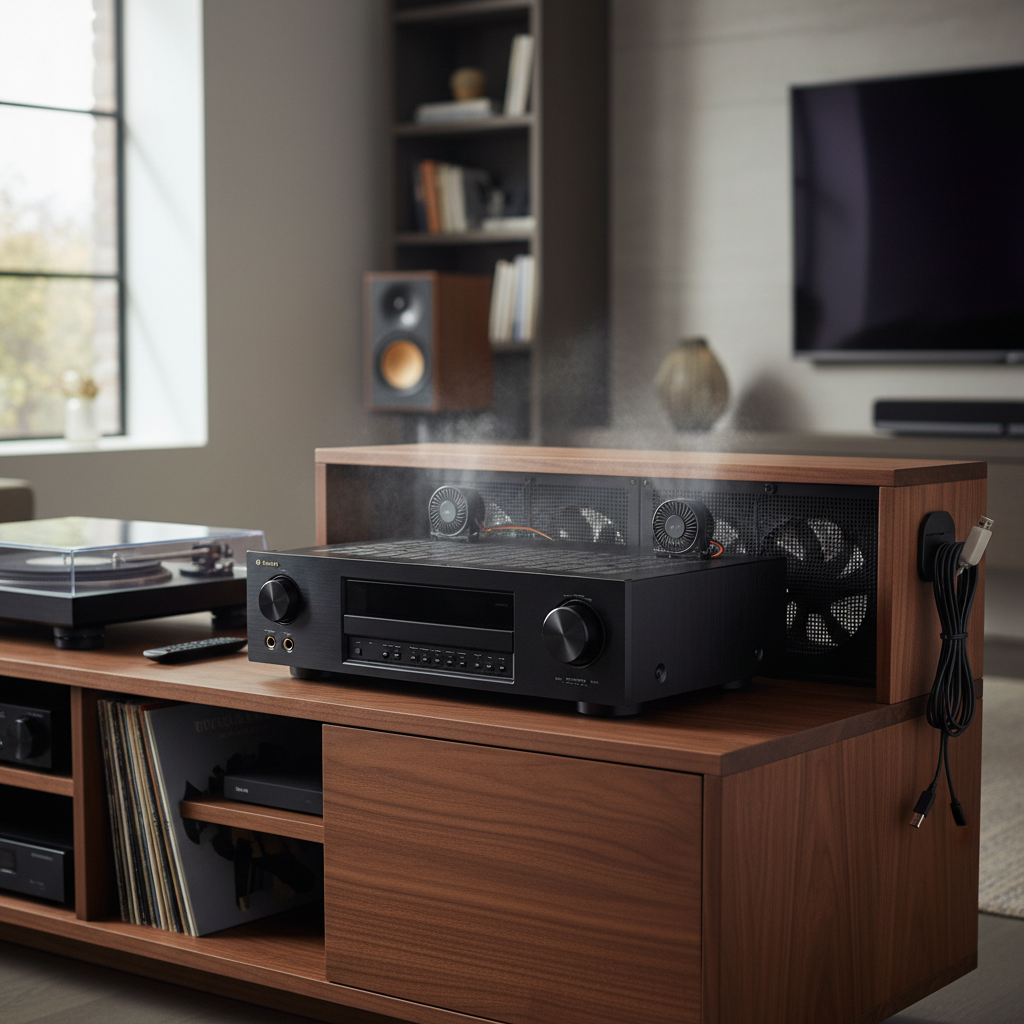
- Dedicated AV Cooling Fans: Products like those from AC Infinity are specifically designed for AV equipment. These often sit on top of the receiver, quietly drawing hot air upwards and out, or can be mounted in cabinets to create an airflow path. Many come with thermal triggers, so they only activate when the receiver reaches a certain temperature.
- Laptop Coolers or PC Fans: A budget-friendly alternative is to repurpose a laptop cooling pad or standard PC case fans. Place a laptop cooler on top of the receiver, or strategically position PC fans (powered by a USB adapter or a 12V transformer) to either blow cool air into the receiver’s vents or exhaust hot air from the cabinet.
- Fan Placement Strategies:
- Exhaust fans: Since heat rises, placing exhaust fans at the top of a cabinet or directly over the receiver’s top vents is highly effective at pulling hot air away.
- Intake fans: For enclosed cabinets, intake fans placed near the bottom can push cooler air into the space, creating a positive pressure system that forces hot air out. An ideal setup often involves a combination of both.
- Place fans near the hottest parts of the equipment, often over the power supply or processing units, which you can identify by carefully feeling for heat after the unit has been running.
Regular Maintenance
Preventative maintenance can go a long way in ensuring efficient cooling.
- Dusting Vents: Regularly wipe down the exterior of your receiver, paying close attention to the ventilation grilles.
- Cleaning Interior: Periodically, and with the receiver unplugged, use a can of compressed air to gently blow dust out of the internal components through the vents. Always follow the manufacturer’s guidelines for cleaning and never open the case unless you are qualified to do so, as capacitors can hold a charge.
Speaker Considerations
Your choice of speakers and how you drive them can also impact receiver temperature.
- Matching Speaker Impedance: Ensure your speakers’ impedance (ohms) is compatible with your receiver’s specifications. If you’re using lower impedance speakers, be aware that your receiver will work harder and generate more heat.
- Avoiding Overdriving: Try not to push your receiver to its absolute limits in terms of volume for extended periods. If you frequently find yourself needing very high volumes, consider a more powerful amplifier or receiver.
“Proper ventilation is the lifeblood of any high-performance audio component. Ignoring heat can lead to diminished performance and premature failure.”
Conclusion
An overheating receiver is more than just an inconvenience; it’s a silent threat to your home entertainment system’s health and longevity. By understanding the causes of excessive heat and implementing both immediate and long-term cooling solutions, you can significantly extend the life of your equipment and enjoy pristine audio and video performance for years to come. From ensuring adequate passive airflow to installing active cooling fans and performing regular maintenance, taking proactive steps against overheating is a smart investment in your setup. Don’t let heat be the enemy of your home theater; empower yourself with knowledge and simple solutions.
Are you ready to give your receiver the cool treatment it deserves?
Frequently Asked Questions
Is it normal for a receiver to get warm?
Yes, it is normal for receivers, especially AV receivers, to get warm during operation. They contain powerful amplifiers and processing circuitry that naturally generate heat. The concern arises when a receiver becomes excessively hot to the touch, emits a burning smell, or shuts down unexpectedly.
How much space does a receiver need for ventilation?
A general recommendation is to provide at least 6 inches of clear space above the receiver, and several inches on the sides and back. This allows for proper airflow and heat dissipation. Tight enclosures without sufficient space are a primary cause of overheating.
Can dust cause a receiver to overheat?
Absolutely. Dust and debris can accumulate on the receiver’s internal components and clog its ventilation vents. This acts as an insulating layer, trapping heat inside and preventing the unit’s cooling system from working efficiently, leading to elevated operating temperatures.
What are the best fans for receiver cooling?
Dedicated AV cooling fans from brands like AC Infinity are highly recommended due to their quiet operation, effective airflow, and often smart features like thermal triggers. Laptop cooling pads or standard PC case fans can also be effective and more budget-friendly alternatives.
When should I worry about my receiver’s temperature?
You should be concerned if your receiver is consistently very hot to the touch, especially on the top surface, even at moderate volumes. Other warning signs include the receiver spontaneously shutting off, audible fan noise (if it wasn’t there before), or a burning electronics smell.