Stepping back in time to explore the technology that once powered our living rooms can be a fascinating journey. In an era dominated by 4K streaming and smart TVs, the Digital Stream DCT700 (often known as the Motorola DCT700) emerges as a relic from a different age of digital television. For those with a soft spot for vintage electronics, or perhaps just a forgotten box in the attic, the question isn’t just what the DCT700 was, but whether it holds any value or utility in today’s fast-paced digital landscape. Let’s dive into this compact digital receiver, examining its original purpose, performance, and its ultimate relevance as a piece of “vintage” tech.
What is the Digital Stream DCT700?
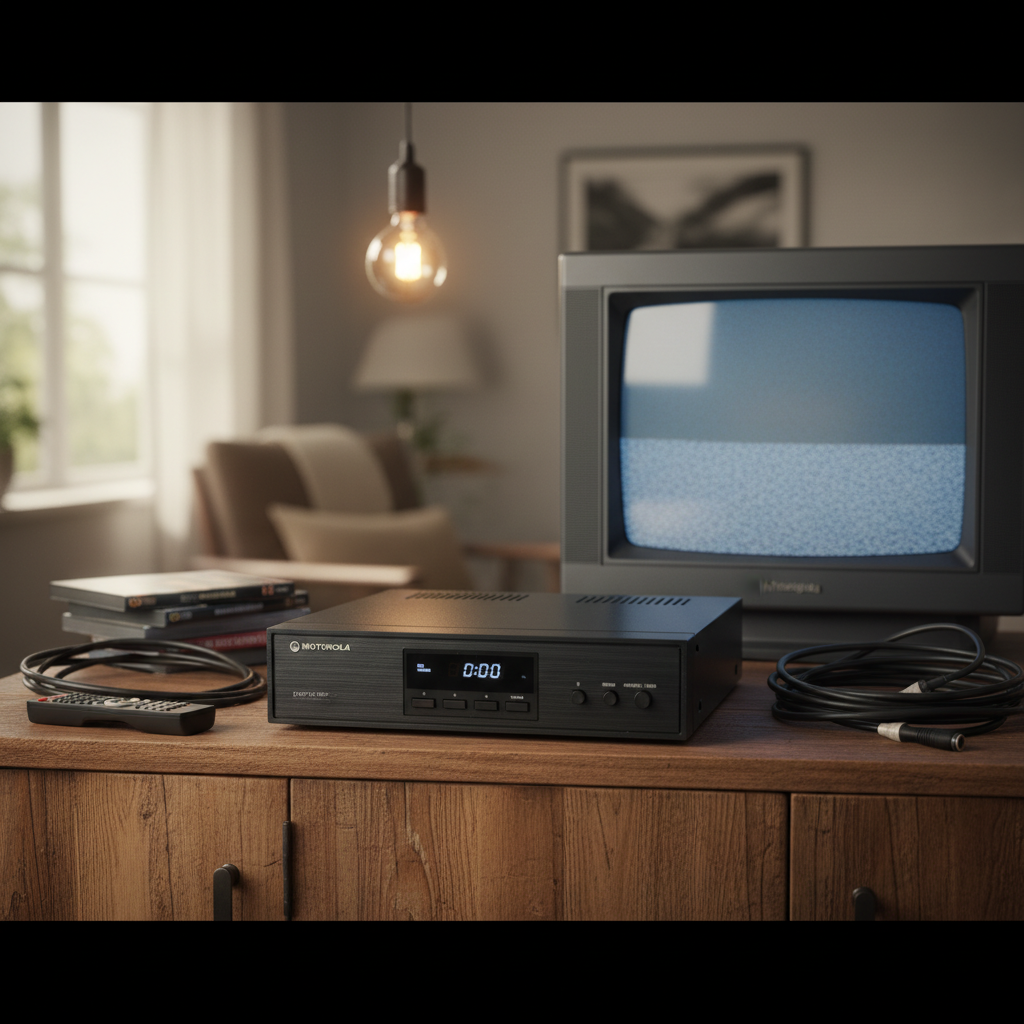
The Digital Stream DCT700 is a standard-definition (SD) digital cable television receiver, a compact set-top box designed to decode digital cable signals. Launched around 2007, its primary role was to enable digital cable subscribers to view their subscribed channels on older or secondary televisions that lacked direct digital tuning capabilities. It served as a more affordable, “no frills” alternative to the pricier HD-capable set-top boxes available at the time, making digital cable accessible to a wider audience without requiring an expensive TV upgrade. This little box played a crucial part in the transition from analog to digital cable television by converting the advanced digital signals into a format that traditional TVs could understand.
Types of Digital Receivers: Where the DCT700 Fits
While modern digital receivers boast high-definition (HD) or even 4K resolution, internet connectivity, and advanced recording features, the DCT700 belonged to a category of basic digital cable converters. It was not a DVB-T2 (terrestrial), DVB-S2 (satellite), or DVB-C (cable) tuner in the sense of a modern, multi-standard device. Instead, it was specifically designed to interface with proprietary QAM (Quadrature Amplitude Modulation) cable networks, acting as a bridge between the digital cable signal and standard analog televisions.
- DVB-T2 (Digital Video Broadcasting – Second Generation Terrestrial): For over-the-air digital broadcast TV, requiring an antenna. The DCT700 is not this.
- DVB-S2 (Digital Video Broadcasting – Satellite – Second Generation): For satellite TV, requiring a dish. The DCT700 is not this.
- DVB-C (Digital Video Broadcasting – Cable): While the DCT700 dealt with cable signals, it was a closed-system device, requiring activation from specific cable providers, unlike generic DVB-C tuners. It essentially converted proprietary digital cable signals.
Advantages of its original design:
- Cost-effective: Offered a low-cost entry point into digital cable for non-HD TVs.
- Simplicity: Straightforward functionality, easy to connect for basic viewing.
- Compact size: Much smaller than many other set-top boxes of its era.
Disadvantages:
- Standard Definition only: No support for HD or higher resolutions.
- Provider-dependent: Required activation and specific cable service, not a universal tuner.
- Limited features: Lacked PVR capabilities, advanced guides, or internet functions.
|
Our Picks for the Best Digital receiver in 2026
As an Amazon Associate I earn from qualifying purchases.
|
||
| Num | Product | Action |
|---|---|---|
| 1 | Denon AVR-S570BT AV Receiver 5.2 Channel 8K Ultra HD Audio & Video, Stereo Receivers, Denon AVR Wireless Streaming Bluetooth, (4) 8K HDMI Inputs, eARC, HD Setup Assistant |

|
| 2 | Pyle Home Stereo Receiver with Bluetooth - 4 Channel Amplifier, 800 Watt Max, USB-A Input w MP3 Player, Easy Karaoke Setup with Mic Vol, Reverb and Delay, RCA in/Out, SD Card, FM Radio - PDA77BU |
|
| 3 | Daakro AK45 Stereo Audio Amplifier,300W Home 2 Channel Wireless Bluetooth 5.0 Power Amplifier System, Home Amplifiers FM Radio, USB, SD Card, with Remote Control Home Theater Audio Stereo System |
|
| 4 | Denon AVR-X1700H 7.2 Channel AV Receiver - 80W/Channel, Advanced 8K HDMI Video w/eARC, Dolby Atmos, DTS:X, Built-in HEOS, Amazon Alexa Voice Control |
|
| 5 | Pyle 200W Stereo Power Amplifier with Bluetooth - Dual Channel Audio Receiver - LED Display - RCA - USB - SD - MIC IN - FM Radio - AUX Input - Perfect for Home & Computer Audio - PDA29BU.5 |
|
| 6 | Pyle 4-Channel Audio Amplifier with Bluetooth - Home Stereo Receiver w/ 500W Max Power - Commercial or Karaoke - Dual Mic Input with Echo, Vol, Talk-Over - AUX In - Sub Out - USB-A MP3 Player, AM/FM |
|
| 7 | Digital TV Converter Box, ATSC Tv Tuner - ZJBOX for Analog HDTV Live 1080P with Recording&Playback,HDMI Output, Timer Setting Tuner Function Digital Channel Free |
|
| 8 | Sony STRDH190 2-ch Home Stereo Receiver with Phono Inputs & Bluetooth Black |
|
| 9 | Donner Stereo Audio Amplifier, 600W Peak 2 Channel Receiver with Bluetooth 5.3, Phono, Optical, Coaxial, USB, FM, 2 Mic-in, Aux, RCA Input for Home, Karaoke, Theater Speakers, MAMP2 |
|
| 10 | YAMAHA R-S202BL Stereo Receiver |
|
Key Features and What to Expect from a Vintage DCT700
When considering a Digital Stream DCT700, especially as a vintage piece, it’s essential to understand its core functionalities and limitations. This box was built for a specific purpose in a particular technological landscape, which significantly impacts its usability today.
Compatibility and Connectivity
The DCT700 was designed for a time when standard-definition televisions were still common, and digital cable was becoming the norm.
- Broadcast Standard: The DCT700 primarily worked with digital cable signals transmitted via QAM, a modulation scheme used by cable companies to deliver digital content over coaxial cables. This meant it needed to be activated and provisioned by a specific cable provider (like Shaw or Verizon at the time) to function.
- Resolution Support: As an SD converter, the DCT700 strictly outputs standard definition video. It was not capable of displaying high-definition content, even if the cable provider offered it through other boxes.
- Connection Ports: For connecting to a television, the DCT700 featured:
- RCA (Composite Video/Audio): The primary output for video and stereo audio, typically connecting to the yellow, white, and red ports on older TVs.
- Coaxial F-type: An RF output, allowing connection to a TV’s antenna/cable input, usually tuned to Channel 3 or 4.
- Notably absent were modern digital outputs like HDMI, which were becoming standard on newer devices even around its release.
Functionality
The DCT700 provided a basic, yet reliable, viewing experience for its target audience.
- Channel Viewing: Once activated, the box allowed users to access their subscribed digital cable channels. It performed the necessary decryption to display these channels.
- Electronic Program Guide (EPG): A basic EPG was available, providing information about current and upcoming programs. Initial setup might have required some waiting for the guide data to download.
- Recording Features: The DCT700 was a pure receiver and did not include any Personal Video Recorder (PVR) or Digital Video Recorder (DVR) capabilities. Users could not record live TV with this device.
- Online Applications/Streaming: Being a product of its time, the DCT700 had no internet connectivity and thus supported no online streaming applications like YouTube, Netflix, or other smart TV features. Its sole focus was cable TV reception.
Performance (Then vs. Now)
Upon its release, the DCT700 was generally well-received for its performance given its price point.
- Original Acclaim: Early reviews praised its “amazing” picture and sound quality on non-HD televisions. Users also appreciated its “speedy menu and guide” and the quick loading of channels. Its all-digital nature was a key selling point for clarity.
- Early Issues: Some minor glitches were reported, such as corrupted menus on Video On Demand services and occasional fleeting screen artifacts. However, these were often perceived as rectifiable through firmware updates.
- Contemporary Challenges: Fast forward to today, and the DCT700 faces more significant hurdles. User reports from 2020-2021 mention issues with remote control consistency and occasional pixelation on channels. More critically, its reliance on specific QAM cable infrastructure means it’s increasingly incompatible with modern services. “The evolution of digital television infrastructure means many legacy devices like the DCT700 struggle to connect or function with today’s advanced networks,” notes tech historian Eleanor Vance. “Their original design, though robust for its era, simply can’t keep pace with IPTV and streaming standards.”
The “Vintage” Question: Is the DCT700 Still Relevant Today?
The “vintage” status of the Digital Stream DCT700 is now undeniable. While it performed admirably in its heyday, the world of digital television has shifted dramatically, raising serious questions about its current relevance.
Pros of a Vintage DCT700 (if still usable)
In very niche circumstances, a DCT700 might still have a role:
- For True Vintage TV Setups: If you have an antique or secondary television with only RCA or coaxial inputs and wish to connect it to a legacy cable system that still supports these boxes, a DCT700 could theoretically provide basic channel viewing.
- Educational or Collector’s Item: As a piece of technology history, it could serve as an example of an early digital cable adapter.
- Extreme Budget Scenario (highly improbable): In an extremely rare case where a cable provider still supports it and a user only needs the most basic, cheapest possible way to get TV on an old set, it might be an option.
Cons and Modern Obsolescence
Unfortunately, the downsides overwhelmingly outweigh the benefits in almost any practical scenario today:
- Limited Cable Provider Support: Many cable providers are phasing out the QAM (RF) infrastructure that the DCT700 relies on, moving towards Internet Protocol Television (IPTV) and streaming-based services. For example, the DCT700 is incompatible with newer services like FiosTV+ because these operate on entirely different technological principles. This means activation and channel reception may be impossible.
- Standard Definition Only: In an age where HD is standard and 4K is common, an SD-only output is a significant limitation for most viewers.
- No Smart Features: The absence of internet connectivity means no access to popular streaming apps (Netflix, YouTube, Hulu, etc.), a staple of modern entertainment.
- Lack of Modern Conveniences: Features like integrated DVR, on-demand libraries, voice control, or advanced interactive program guides are completely missing.
- Acquisition Challenges: While the boxes themselves might be found cheaply on secondary markets (often without remotes or cables), the real challenge lies in finding a compatible and willing cable provider.
Finding and Using a Digital Stream DCT700 Today
Attempting to acquire and use a Digital Stream DCT700 in today’s environment is more of a historical or experimental endeavor than a practical solution for daily TV viewing.
Acquisition
If you’re intent on finding one, your best bet is the secondary market:
- Online Marketplaces: Websites like eBay are likely places to find used DCT700 units. Be aware that they are often sold as “receiver box only,” meaning you’ll need to source your own RCA cables, coaxial cables, power adapter, and critically, a compatible remote control.
- Local Resale Shops/Electronics Recyclers: Occasionally, these devices might turn up in such places, though their functionality is rarely guaranteed.
Setup
Assuming you’ve found a unit and a mythical cable provider who still supports it:
- Connection: Connect the DCT700 to your TV using either RCA cables (for composite video and stereo audio) or a coaxial cable (tuning your TV to channel 3 or 4).
- Power On: Plug in the power adapter.
- Activation: This is the most crucial and often impossible step. You would need to contact your cable provider to activate the box on their network. If their infrastructure has moved beyond QAM for basic channels, they simply won’t be able to activate it.
- Channel Tuning: The DCT700 performs the channel decryption; your TV simply needs to be on the correct input (AV or Channel 3/4). No manual channel scan on the box itself is typically necessary.
Maintenance
- Cleaning: Keep the unit free of dust to ensure proper ventilation.
- Remote Control: If you experience issues with the remote (a common complaint even a few years ago), troubleshooting might involve replacing batteries or attempting to find a universal remote code.
- Firmware Updates: It is highly unlikely that any firmware updates are available for a device this old, especially from cable providers who have moved on from supporting it.
Alternatives to the DCT700 in a Modern World
For anyone seeking to watch television today, whether basic channels or advanced streaming, there are numerous modern alternatives that vastly outperform the Digital Stream DCT700 in every aspect.
- Provider-Issued Cable Boxes: Your current cable provider will offer modern set-top boxes, often with HD/4K support, PVR capabilities, on-demand libraries, and integrated streaming apps. These are designed to work seamlessly with their current infrastructure.
- Streaming Devices: Devices like Roku, Amazon Fire TV Stick, Apple TV, and Google Chromecast offer access to a universe of content via apps, including live TV streaming services (like Sling TV, YouTube TV, Hulu + Live TV) and vast libraries of on-demand movies and shows. They typically connect via HDMI and offer HD or 4K resolution.
- Smart TVs: Most new televisions come with integrated smart platforms, eliminating the need for an external streaming device. They connect directly to your home Wi-Fi and provide access to all major streaming services.
- ATSC 3.0 Tuners (for Over-the-Air): If you’re looking for free over-the-air broadcast TV, modern ATSC 3.0 (NextGen TV) tuners, connected to an antenna, offer significant improvements in picture quality, sound, and even interactive features compared to older digital tuners.
- Digital Adapters (for Analog TVs with Modern Cable): In rare cases where an analog TV must be connected to a modern digital cable service that still offers a basic digital adapter option (not a full set-top box), inquire with your provider. These are distinct from the DCT700 and are designed for current networks.
Conclusion
The Digital Stream DCT700 occupies a nostalgic corner in the history of home entertainment, representing a pivotal moment in the transition to digital cable. In its prime, it was a praised, budget-friendly solution for extending digital television to every corner of the home, offering solid standard-definition picture and sound with speedy performance. However, as cable providers have evolved their infrastructure, embracing IPTV and advanced streaming solutions, the DCT700’s QAM-based design has rendered it largely obsolete for practical use today. Its lack of HD, smart features, and recording capabilities, combined with dwindling provider support, means it’s now more of a collector’s item than a functional device.
For anyone looking to experience digital television in the modern era, investing in a contemporary cable box or a dedicated streaming device offers a far superior and more reliable experience. While the DCT700 served its purpose well in its time, its era has undeniably passed.
Are there any other vintage digital receivers that hold a special place in your memory, despite their current obsolescence?
Câu Hỏi Thường Gặp
Can I still use a Digital Stream DCT700 today?
Using a Digital Stream DCT700 today is highly unlikely for most people. Its functionality depends on legacy QAM cable infrastructure, which many providers have phased out in favor of newer IPTV and streaming technologies. You would need a cable provider that still actively supports and can activate this specific, older model.
Does the DCT700 support HD channels?
No, the Digital Stream DCT700 is a standard-definition (SD) digital cable receiver. It was designed to output video at SD resolutions, typically via RCA or coaxial connections, and is not capable of displaying high-definition (HD) content.
What kind of cables does the DCT700 use?
The DCT700 primarily uses RCA cables (composite video and stereo audio, typically yellow, white, and red connectors) and a coaxial F-type cable (for RF output to Channel 3 or 4) to connect to a television. It does not have modern digital outputs like HDMI.
Do I need a cable subscription for the DCT700?
Yes, the Digital Stream DCT700 requires an active cable television subscription and activation by your cable provider. It is a proprietary set-top box designed to decrypt and display channels from a specific cable service, not a free over-the-air (OTA) tuner.
Are there any common problems with the DCT700?
In its early days, minor issues included corrupted Video On Demand menus and fleeting screen artifacts. More recently, users reported inconsistencies with remote control functionality and occasional pixelation. However, the most significant current “problem” is its general obsolescence and incompatibility with modern cable network infrastructures.